
Step 1: Configure Incoming Call Routing
Navigate to: Account Settings → Project Settings In the Default Incoming Routing section, you can define:- Default Process – The process that will handle incoming calls if no specific number-based routing exists.
- Default Call Flow – The call flow that will be executed for incoming calls by default.
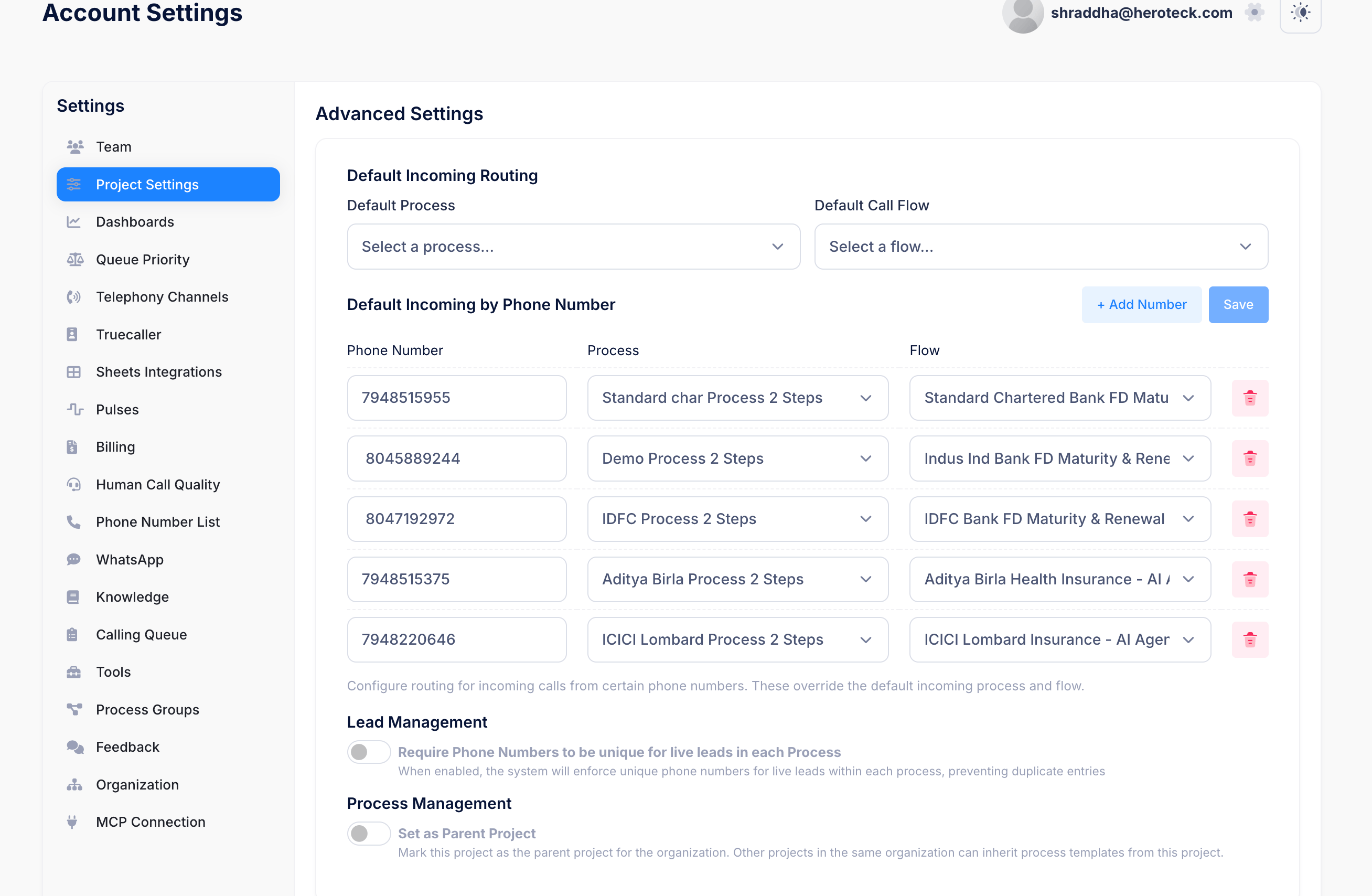
Number-Based Routing
For each phone number, select:- The Process that should handle the call.
- The Flow that should be executed when a call arrives on that number.
- Number A → Standard Chartered FD Maturity Flow
- Number B → IndusInd Bank FD Renewal Flow
- Number C → Health Insurance Lead Qualification Flow
Default Call Flow here is a last-resort fallback, not the primary control. Uservox actually prefers, in order: (1) a returning lead’s current state in the process, (2) the process’s own first Make Call node, and only (3) this Default Call Flow field — which is rarely reached, since almost every process has its own Make Call node. To change which agent answers, edit the process’s Make Call node directly. See Incoming Call Routing for the full breakdown.
Step 2: Save the Configuration
After selecting the desired process and flow mappings, click Save. From this point onward, UserVox will automatically route incoming calls according to the configured rules.Step 3: Find Incoming Calls
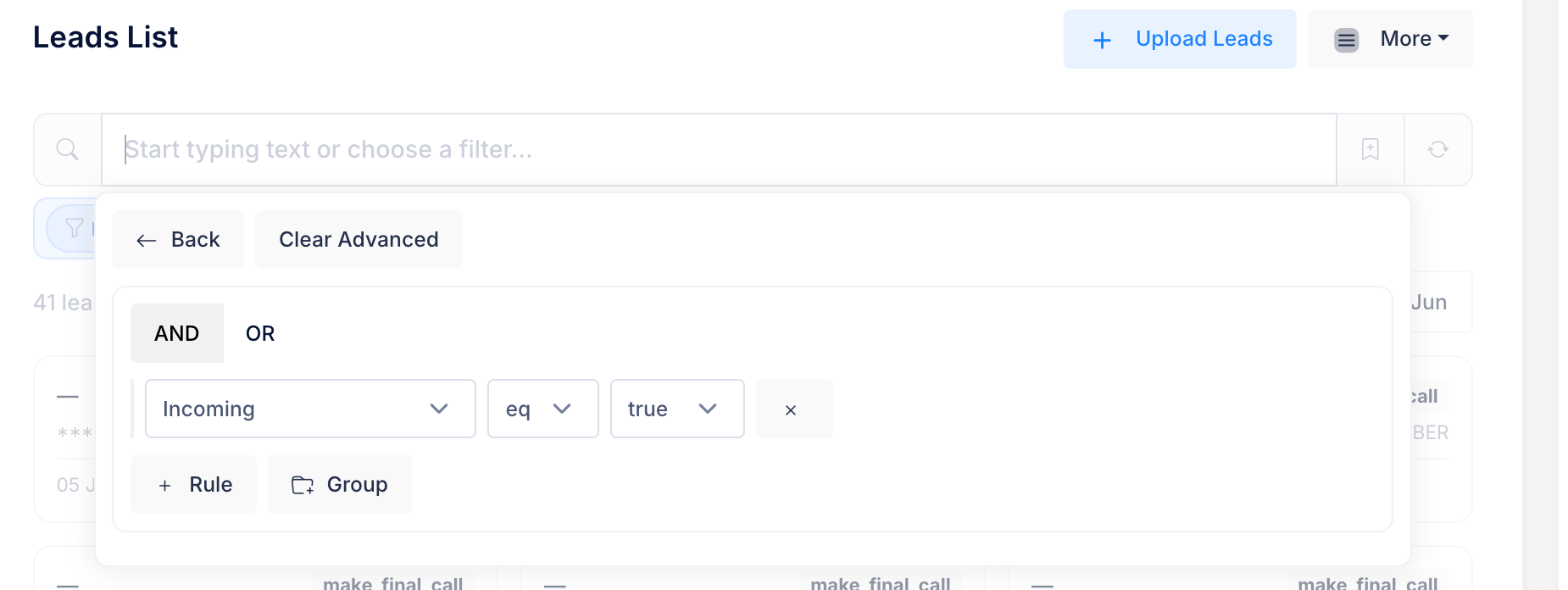
To review incoming call activity: Navigate to: Leads List Use the advanced filters to locate inbound conversations.Filtering Incoming Calls
- Open the filter panel.
- Create a filter:
- Incoming
- Equals
- True
- Apply the filter.
Step 4: Monitor Incoming Call Activity
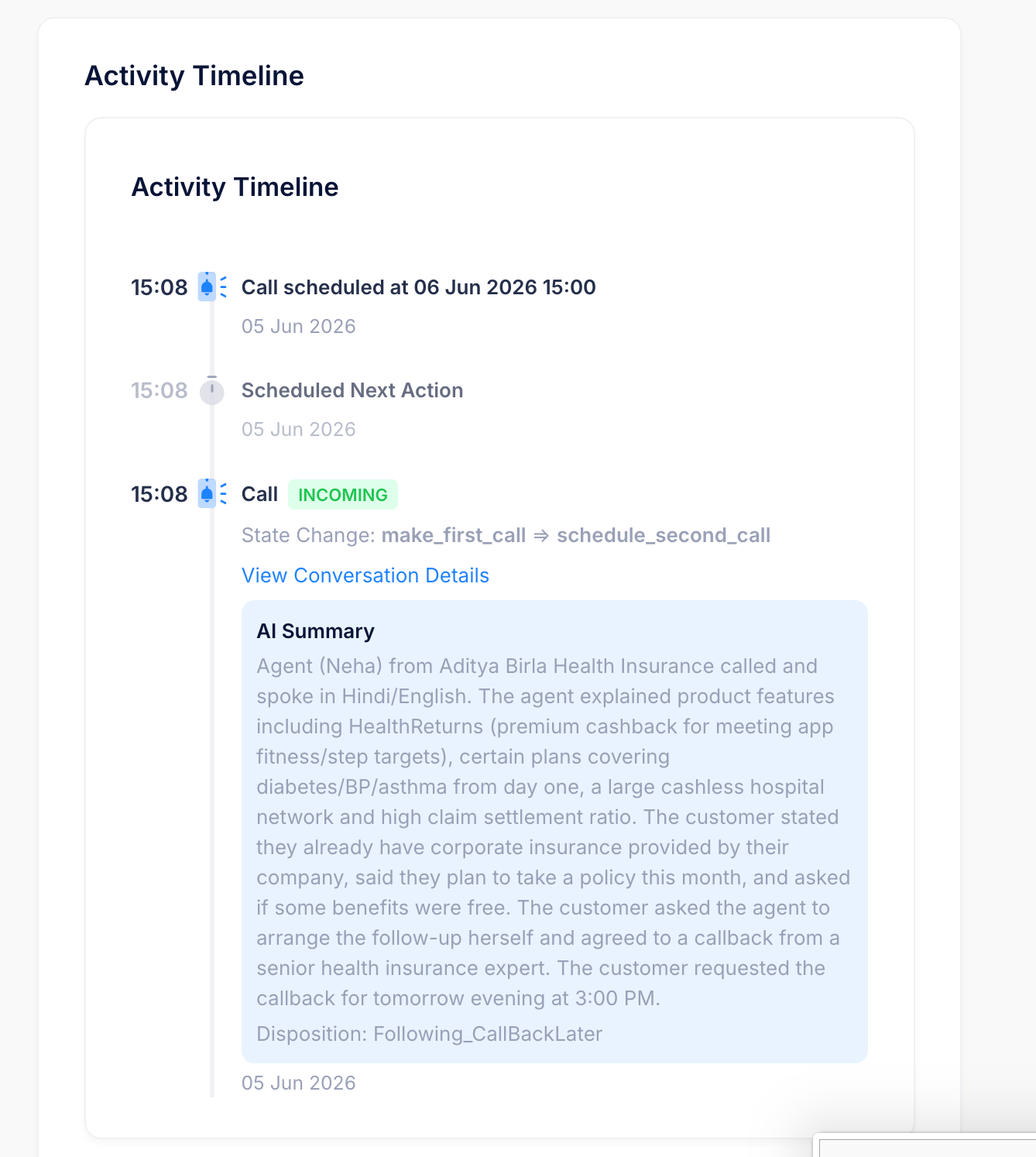
Open any lead from the filtered list to access its Activity Timeline. The Activity Timeline provides complete visibility into the inbound interaction, including:- Incoming call event
- State transitions within the flow
- AI-generated conversation summary
- Customer disposition
- Follow-up actions
- Scheduled callbacks
- Future workflow actions
Step 5: Review Call Outcomes
For every incoming call, UserVox automatically records:Conversation Summary
An AI-generated summary highlighting:- Customer requirements
- Key discussion points
- Objections raised
- Next steps agreed upon
Disposition
The final outcome of the interaction, such as:- Interested
- Following_CallBackLater
- Not Interested
- Qualified Lead
- Appointment Booked